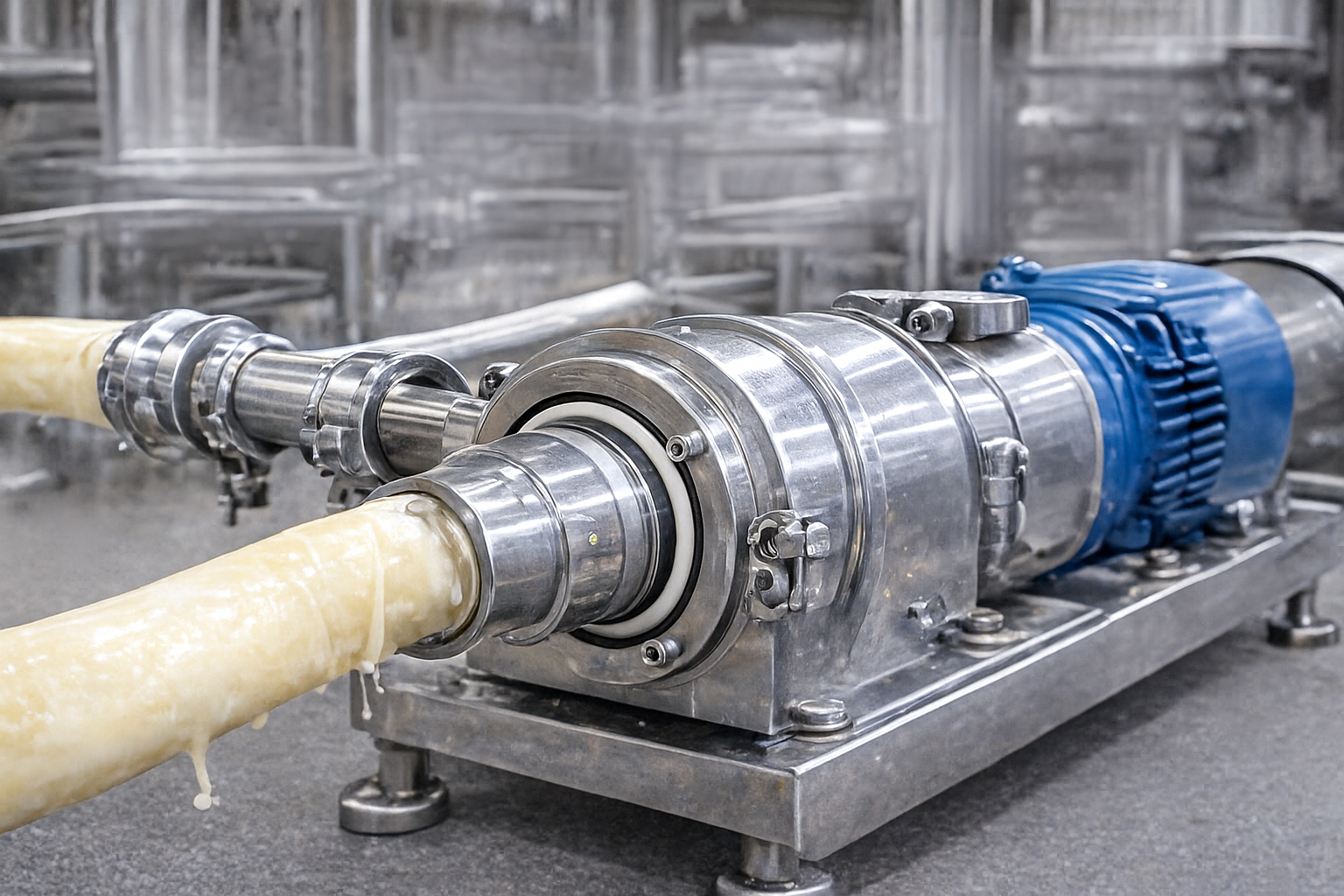

Food and beverage manufacturing depends on strict contamination control, clean agitation, sterile material transfer and leak-free pump operation, making seal leakage prevention critical to production safety. Whether a facility handles dairy, juice preparation, brewery fermentation, viscous sauces, edible oils, syrups, flavor extracts or nutritional supplements, pump sealing integrity is directly tied to product quality and compliance.
Unlike chemicals, hydrocarbons or slurry duty, food processors have one key requirement:
Zero contamination from sealing systems — both internal and external.
Mechanical seals are the first critical barrier between:
- product fluid
- external environment
- microbial ingress
- shaft movement
- wash-down cleaning
- steam or sanitation process
A single leakage incident in food-grade pumps can result in:
- batch rejection
- microbial contamination risk
- allergen cross-contact
- sanitation non-compliance
- FDA or FSSAI investigation
- production line shutdown
- consumer safety risk
This guide breaks down:
- why sealing leakage occurs in food duty
- hygienic sealing principles
- FDA elastomer selection
- CIP/SIP cleaning implications
- when to upgrade sealing geometry
- how agitator seals improve contamination control
What Makes Food Pump Sealing Unique?
Food processing lines operate under conditions that accelerate sealing stress:
- frequent cleaning cycles
- hot water sanitation
- chemical wash-down
- varying product viscosity
- suspended solids or pulp
- agitation & mixing cycles
- thermal shock and vibration
- vacuum-to-pressure transition
Pumps used in dairy, beverage, protein mixing or syrup duty must deliver:
- zero-leak agitation
- microbial isolation
- chemical sanitation compatibility
- hygienic sealing surfaces
- FDA elastomer compliance
- no dead-volume or stagnation points
In regulated food plants, a leaking mechanical seal is not just an MRO event — it is a quality and compliance incident.
Common consequences include:
- microbial load increase
- allergen contamination
- batch hold or recall
- wash-down cycle extension
- cleaning validation downtime
- non-conformance in audits
Hence sealing integrity is a safety decision, not just an equipment decision.
Common Causes of Seal Leakage in Food Processing Pumps
Poor Elastomer Compatibility
Elastomers come into contact with:
- dairy fats
- sweeteners
- cleaning detergents
- enzymes
- sanitizers
- acidic concentrates
- flavorings and food acids
Incorrect elastomer material leads to:
- swelling or shrinking
- hardening or softening
- blistering or cracking
- micro-channel leakage
- internal contamination risk
Food pumps must use FDA or food-grade elastomers such as:
- EPDM
- Silicone (depending on temp)
- PTFE
- FKM (if compatible)
Viton is not food approved unless certified — procurement teams must verify documentation.
Non-Hygienic Seal Geometry
Sealing interfaces can trap food particles, pulp or dairy proteins if:
- dead pockets exist inside the seal housing
- shaft misalignment creates micro-gaps
- seal faces are not flush-polished
- elastomer seating is not drainable
- CIP/SIP steam doesn’t reach sealing surfaces
This creates:
- biofilm formation
- microbial lodging
- allergen cross-contact
- sanitation failure
- taste or odor contamination
Food-grade sealing requires:
- zero dead-space geometry
- self-draining seal housings
- FDA-grade elastomer interfaces
- micro-finish sealing faces
- cleanable design for CIP and steam
If CIP/SIP cannot sanitize the sealing surfaces, your sealing solution is non-compliant by design, even if the seal does not leak.
Thermal Shock During Cleaning
Food pumps alternate between:
- processing temperature
- warm water rinse
- hot CIP detergent
- high-temperature SIP steam
- ambient cooldown
Rapid heat cycling affects:
- face flatness
- elastomer expansion
- gland deformation
- lubrication film behavior
Thermal shock causes:
- micro-leakage during cooling
- shrinkage or swelling gaps
- cyclic leakage during restart
- face cracking under steam
Food-grade seals MUST withstand:
- hot water
- caustic cleaning
- acid rinse
- steam sterilization
- temperature deltas without micro-channel formation
This requires both correct elastomers and metallurgy.
Slurry, Fiber or Pulp Entrapment
Food applications often involve:
- fruit pulp
- dairy protein
- chocolate and high-viscosity mixes
- sweetener crystallization
- fibrous material (vegetable, herbal blends)
These particulates:
- abrade seal faces
- increase shaft torque
- compromise lubrication film
- break elastomer seating
- cause spiral leakage
Solution:
- agitation sealing geometry
- correct barrier lubrication
- slurry-resistant sealing faces
- self-draining housings
FDA and Food-Grade Elastomer Requirements
Food duty elastomers must meet:
- FDA CFR 21 compliance
- EU or NSF compliance for contact surfaces
- traceability documentation
- migration and allergen safety
- steam sterilization tolerance
- non-absorption or odor retention
- fat/oil compatibility
FDA elastomers MUST NOT:
- release extractables
- discolor under CIP/SIP
- retain aroma or flavor
- degrade under sanitizers
Procurement teams should NEVER choose elastomers based only on dimension or OEM cross-reference.
They should validate:
- media compatibility
- chemical sanitizer compatibility
- steam compatibility
- heat cycling tolerance
- documentation for food contact
If seals pass dimensions but fail compliance, your hygienic system still fails.
The Role of Agitator Seals in Food Processing
Food and beverage processors frequently use:
- tank agitators
- fermentation mixers
- dairy blending shafts
- syrup agitation lines
- slush, gel or fat mixing
Agitator seals deliver:
- zero microbial ingress
- zero escape of product vapors
- stable vacuum and pressure duty
- complete cleanability under CIP
- steam sterilization (SIP) inside vessel
Single agitator seals are suitable for:
- non-hazardous duty
- stable processing temperature
- minimal solids or pulp
Double agitator seals are recommended for:
- vacuum agitation
- dairy fermentation
- slurry or pulp blends
- flavor concentrate mixing
- cleaning chemical residue risk
- allergen control requirements
- VOC vapor containment
How to Eliminate Micro-Leakage and Contamination
A complete hygienic sealing strategy should include:
Zero-Dead-Space Design
- eliminate microbial pockets
- ensure full CIP access
- allow full drainability
FDA Elastomer Selection
- validate with detergents, fats, acids, steam
- trace documentation for audits
Barrier or Flush Systems
- prevent dry running
- lubricate faces under viscous duty
- remove particulate load in slurry agitation
Torque & Shaft Alignment
- improper shafting leads to micro-vibration and leakage
- agitator seals stabilize torque under mixing
Periodic Seal Face Lapping
- maintains flatness during slurry abrasion
- restores geometry without full replacement
Why CIP/SIP Validation Depends on Seal Quality
For a reactor, tank or pump to pass CIP/SIP validation:
- all wetted components must be cleanable without disassembly
- sealing faces must withstand steam sterilization
- elastomers must not expand or degrade under caustic wash
- micro-surfaces must NOT harbor residues or biofilms
- drainability must be demonstrated and documented
If any sealing surface does not receive sufficient CIP/SIP exposure, validation teams will classify the system as non-hygienic, even if it appears mechanically functional.
Thus, sealing is not only a pump reliability component — it is a regulatory compliance device.
Repair Strategy for Food-Grade Mechanical Seals
Many food plants discard seals prematurely due to leakage.
However, refurbishment can restore:
- sealing face geometry
- elastomer upgrade
- dead-space removal
- dimensional realignment
- torque stabilization
- cleaning compatibility
Repair offers:
- 50–70% cost savings
- lower shutdown procurement burden
- fast turnaround
- repeatable validation geometry
STRONG CTA – Generate Food Industry Leads
If your dairy, beverage or food processing line faces:
- seal leakage
- micro-contamination risk
- CIP/SIP sterilization issues
- elastomer degradation
- slurry agitation wear
- compliance documentation gaps
Our sealing specialists can:
✓ recommend hygienic sealing geometry
✓ validate elastomer selections
✓ advise on agitation sealing
✓ assess CIP/SIP risks
✓ refurbish seals economically
✓ support compliance documentation
✓ supply FDA-grade sealing with traceability
📧info@cosmosseals.com | 🌐www.cosmosseals.com | 📞 +91 9769133001
2 thoughts on “Preventing Seal Leakage in Food Processing Pumps – Hygienic Duty And FDA Elastomers Explained”