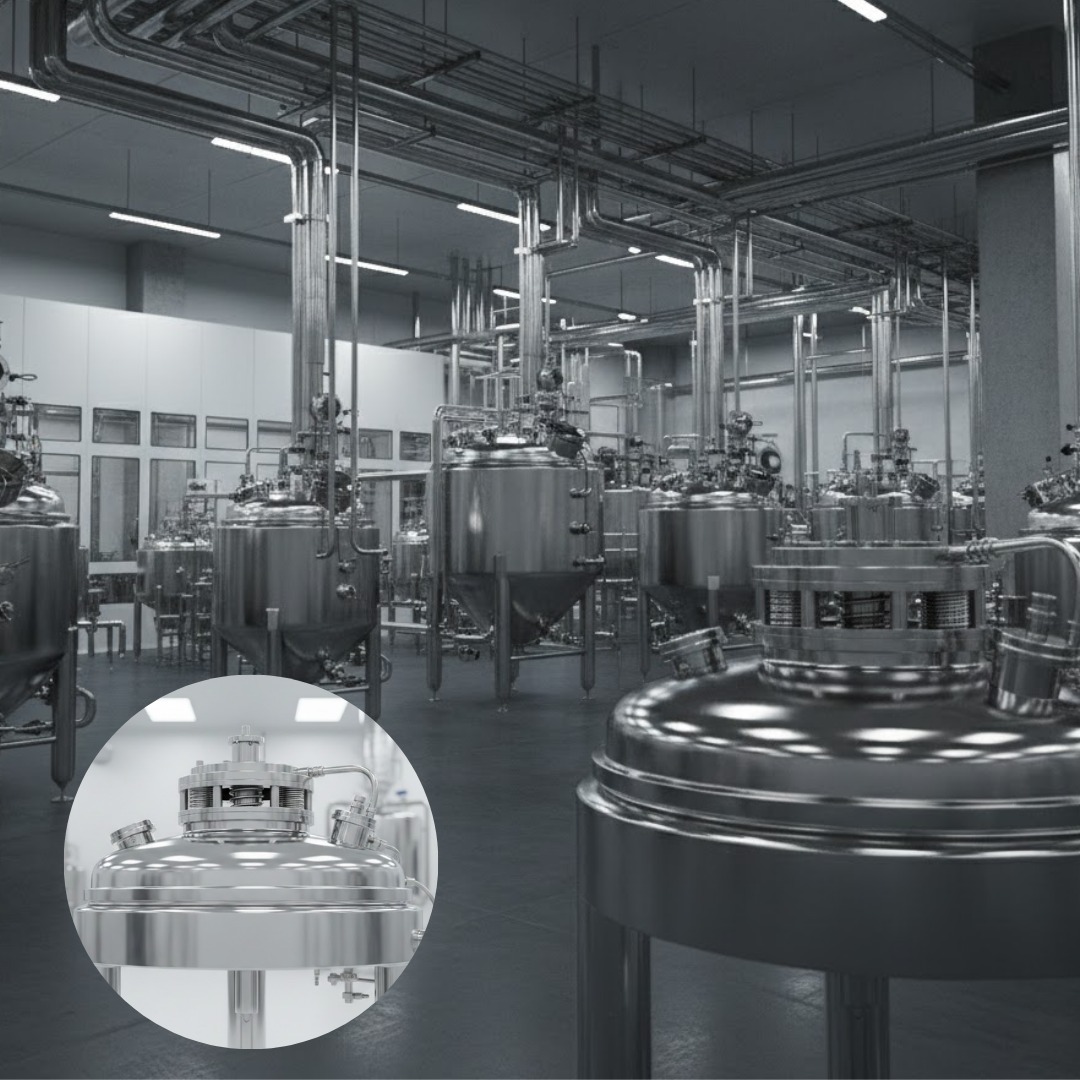

Why Agitator Seals are Critical…
Pharmaceutical manufacturing operates under some of the most stringent sterility and regulatory requirements in any industrial sector. Reactors and mixing vessels form the core of formulation, fermentation, crystallisation, biological processing, and slurry preparation. In these systems, agitator Seals shafts penetrate the sterile boundary of the vessel and operate under changing pressure, temperature, and torque conditions. This makes the sealing interface one of the most critical control points in the entire process.
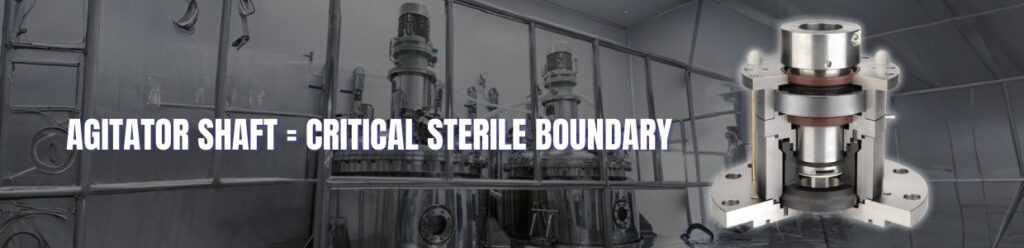
Unlike centrifugal pumps, agitators experience complex shaft movement, variable loads, viscous resistance, and continuous mechanical stress. The sealing system is responsible not only for preventing leakage, but also for maintaining sterility, containing vapours, supporting CIP and SIP cycles, and ensuring long-term mechanical stability. In regulated pharmaceutical environments, agitator seals are not optional hardware components; they are compliance-critical devices that directly affect batch sterility, product purity, cleaning validation, FDA and GMP audit outcomes, operational uptime, and documentation traceability.
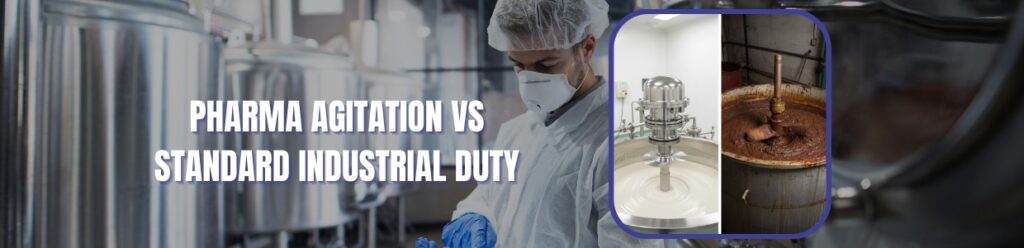
Pharma agitation duty is fundamentally different from standard industrial sealing. Reactors operate under sterile batch conditions with aseptic agitation, precise torque transmission, viscous or slurry mixing, thermal cycling through jacket heating, vacuum and pressure transitions, inert gas blanketing, and often solvent or explosive vapour handling. Under these conditions, the seal must prevent microbial ingress, eliminate leakage and vapour transmission, allow complete steam sterilisation, enable effective CIP wash-down, and maintain consistent shaft motion without creating dead zones or contamination risks.
CIP and SIP processes are designed to clean and sterilise equipment without disassembly, but their effectiveness depends heavily on seal design. Agitator seals must withstand repeated exposure to high-temperature steam, aggressive cleaning chemicals, pressure and vacuum cycling, condensate formation, and thermal shock. If the seal geometry is not designed specifically for CIP/SIP duty, trapped media can remain at the shaft interface, sterilisation temperatures may not reach critical surfaces, elastomers may degrade or swell, and sealing faces can distort under steam shock. In such cases, the seal becomes a hidden contamination risk rather than a protective barrier.
One of the most critical design requirements in pharma agitator sealing is the elimination of dead space. Any crevice, pocket, or stagnant zone where steam or detergent cannot reach becomes a potential site for microbial growth. In sterile reactor environments, dead space is not a mechanical defect but a GMP compliance failure. Proper agitator seals are designed with fully cleanable, drainable geometries using FDA-approved materials to ensure that every surface exposed to product is also exposed to cleaning and sterilisation media.
Leak-free containment is another non-negotiable requirement. Pharma reactors must maintain zero external leakage, prevent microbial ingress, and ensure that solvent vapours or aerosols do not escape into the environment. Agitator seals must protect sterility under vacuum, during aggressive CIP cycles, throughout fermentation byproduct generation, and across fluctuating vapour pressures. Any leakage event in pharma agitation is not treated as routine maintenance; it triggers deviation reporting, potential batch rejection, regulatory scrutiny, and extended downtime.
Thermal and pressure cycling further complicate sealing performance. Pharma reactors routinely heat during processing, cool during cleaning, undergo steam sterilisation, and transition between vacuum and pressure states. These cycles cause shaft expansion, seal face thermal stress, elastomer contraction and expansion, and torque fluctuations. CIP/SIP agitator seals must absorb shaft runout, maintain face geometry across thermal cycles, resist steam shock, and prevent flashing at the sealing interface. This is where correct metallurgy and elastomer selection become essential rather than optional.
Material selection for sterile processing requires careful engineering. Seal faces are typically manufactured from silicon carbide or tungsten carbide to provide chemical resistance, thermal stability, and low friction. Elastomers must meet FDA or USP Class VI requirements, with options such as EPDM, FKM (Viton), PTFE, or silicone selected based on chemical exposure and temperature limits. Seal bodies are generally manufactured from SS316 or higher grades to ensure corrosion resistance and sanitisation compatibility. Incorrect material selection leads to elastomer swelling, leakage under vacuum, chemical attack during cleaning, and loss of SIP integrity.
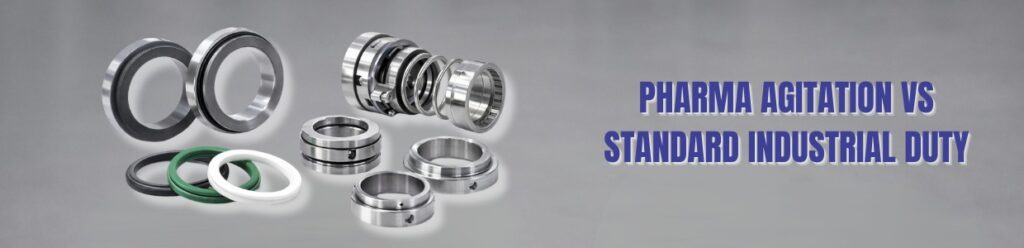
For many regulated pharma applications, double agitator seals are the preferred standard. While single agitator seals may be acceptable for non-hazardous, low-risk applications, double seals provide superior containment when handling solvents, aggressive chemicals, biological mass, slurry media, or fluctuating pressure conditions. By using barrier or buffer fluids, double agitator seals stabilise lubrication, control heat, protect sealing faces, and eliminate external leakage, making them the preferred solution for validated sterile processing.
Seal support systems further enhance reliability by maintaining lubrication, dissipating heat, and stabilising pressure at the sealing interface. In solvent duty, fermentation, slurry agitation, or vacuum cycling, thermosyphon or pressurised systems significantly improve lifecycle consistency and regulatory confidence.
From a cost and lifecycle perspective, agitator seals do not always need full replacement during every shutdown. If sealing geometry remains intact, professional refurbishment through face lapping, elastomer replacement, dimensional restoration, and pressure revalidation can deliver significant cost savings while maintaining compliance. Proper refurbishment supports predictable shutdown installation, documented validation, faster turnaround, and reduced inventory stress.
Ultimately, pharma agitator sealing must support validation documentation, traceability, CIP/SIP compatibility records, maintenance logs, and regulatory audits. Working with a sealing partner who understands both engineering and regulatory expectations is essential for sustained compliance and operational stability.
REACH US AT:-
📞+91 97691 33001 | 📧info@cosmosseals.com | 🌐 www.cosmosseals.com