
What Causes Mechanical Seal Failure in Chemical Pumps?
Chemical processing plants operate under aggressive conditions involving corrosive fluids, abrasive slurries, high temperatures, pressure fluctuations, vacuum duty, and volatile or hazardous media. In these environments, mechanical seals serve as the primary barrier against leakage, contamination, environmental exposure, and safety risk. Despite robust engineering, mechanical seal failure remains one of the most common causes of unplanned shutdowns and maintenance escalation in chemical plants.
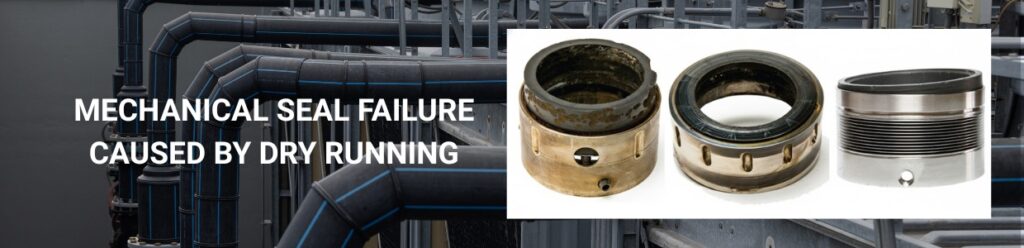
The most common cause of mechanical seal failure is dry running. Mechanical seals depend on a thin lubricating fluid film between the rotating and stationary faces. In chemical applications, dry running occurs due to blocked suction, air pockets, cavitation, inadequate priming, or process upset. Even a few seconds of dry operation can generate excessive heat, crack seal faces, damage elastomers, and permanently distort sealing geometry.
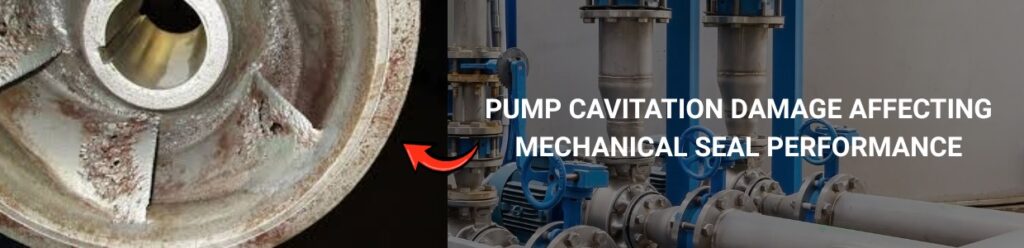
Cavitation and vapour lock are closely related failure mechanisms. Vapour bubbles collapsing at the seal faces cause vibration, loss of lubrication, thermal shock, and rapid erosion. In chemical duty, cavitation is often triggered by NPSH issues, slurry blockage, operating away from BEP, or temperature-induced vapour formation. These failures are frequently misdiagnosed as normal wear, when the root cause lies in pump hydraulics rather than the seal itself.
Incorrect material selection is another major contributor to seal failure. Chemical compatibility between the seal and the process fluid is critical. Mismatched metallurgy or elastomers lead to corrosion, swelling, shrinkage, blistering, cracking, and energy instability. Selecting seals purely by dimension rather than chemical compatibility is a common and costly mistake. Proper selection using SS316, silicon carbide, tungsten carbide, Hastelloy, and compatible elastomers such as Viton, EPDM, or PTFE dramatically improves seal life.
Slurry abrasion further accelerates failure by scratching sealing surfaces, destroying face flatness, and creating leakage paths. Without proper flushing, filtration, or support systems, solids enter the seal chamber and erode critical components. Abrasive duty is common in pigment processing, catalyst handling, mineral acids, mining chemicals, and polymer applications.
Improper installation and misalignment also contribute significantly to premature failure. Mechanical seals are precision assemblies, and incorrect compression, poor handling, worn shafts, or over-tightened fasteners lead to uneven wear and immediate leakage. Cartridge seals reduce these risks by eliminating installation guesswork and improving repeatability.
Thermal shock caused by rapid temperature cycling cracks faces, degrades elastomers, and destabilises lubrication films. Pressure instability in batch reactors and chemical systems further disrupts sealing integrity, often necessitating double seals with support systems to maintain stability.
In many chemical applications, professional seal repair and replaces offers are cost-effective. Through face lapping, elastomer replacement, dimensional restoration, and pressure testing, refurbished seals can deliver near-OEM performance while reducing cost, downtime, and inventory burden. Replacement should be reserved for cases where structural damage or duty changes make refurbishment impractical.
REACH US AT:-
📞+91 97691 33001 | 📧info@cosmosseals.com | 🌐 www.cosmosseals.com
2 thoughts on “What Causes Mechanical Seal Failure in Chemical Pumps? (Root Causes + Repair Strategy)”