
Introduction
Choosing between cartridge mechanical seals and component mechanical seals (Cartridge Seals vs Component Seals) is a critical decision for industries operating pumps, agitators, and rotating equipment. While both sealing solutions serve the same fundamental purpose preventing leakage along a rotating shaft their design philosophy, installation approach, and lifecycle performance differ significantly.
For procurement teams, maintenance managers, and plant engineers, this decision directly impacts equipment reliability, maintenance workload, downtime risk, and total operating cost. Selecting the wrong seal type can lead to repeated failures, installation errors, and higher long-term expenses, even if the initial purchase cost appears lower.
Understanding the practical differences between cartridge seals and component seals helps industries make informed, performance-driven choices rather than price-based decisions.
What Are Component Mechanical Seals?
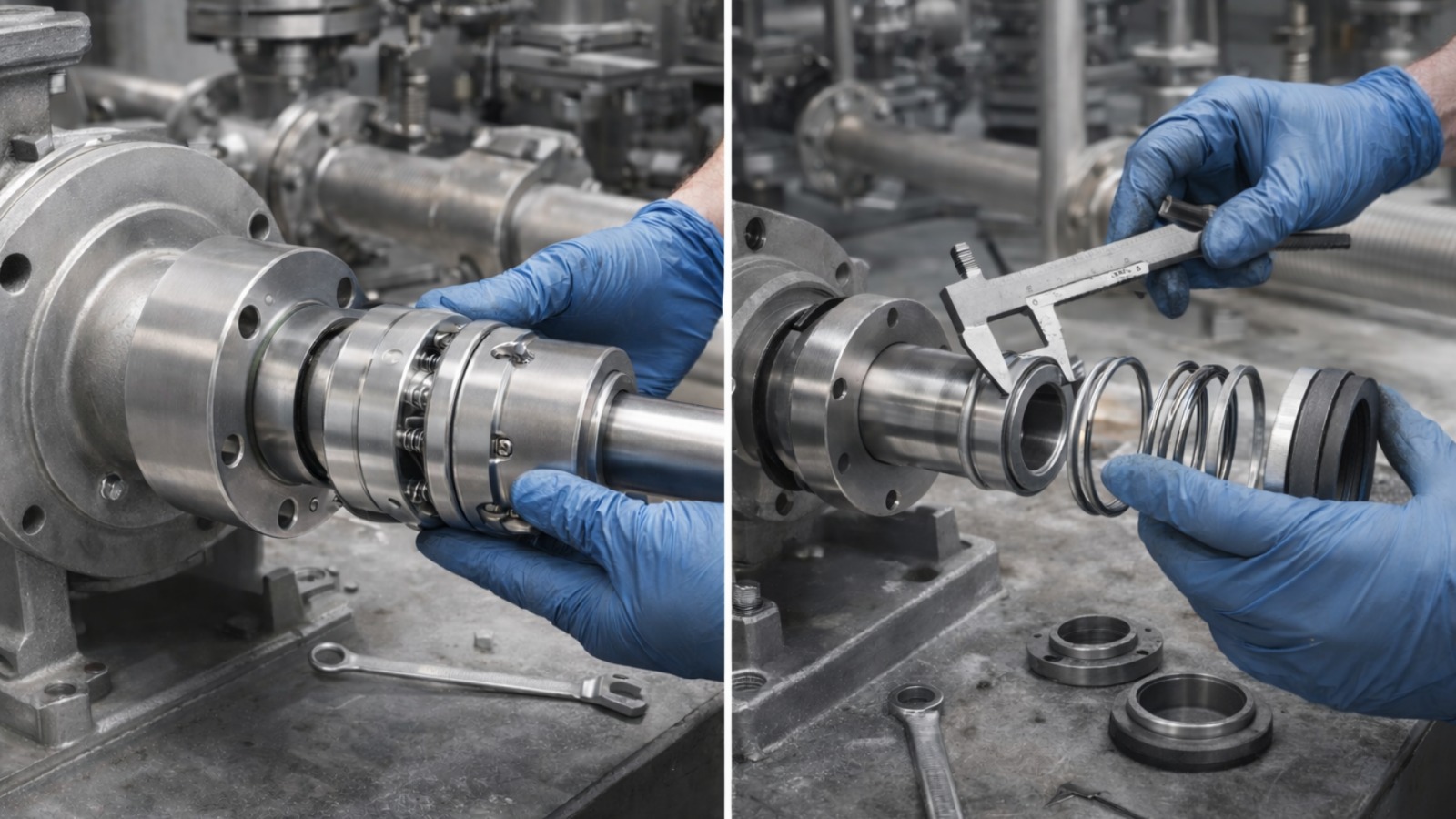
Component mechanical seals are traditional sealing solutions supplied as individual parts that are assembled directly onto the pump or equipment shaft during installation. These typically include rotating and stationary seal faces, springs, secondary sealing elements, and hardware components.
Component seals offer flexibility in design and material selection, making them suitable for a wide range of standard pump applications. They are commonly used in facilities where operating conditions are stable and experienced maintenance teams are available to handle precise installation requirements.
However, because component seals rely heavily on correct setting length, alignment, and assembly sequence, they are more susceptible to installation-related errors. Small deviations during installation can lead to premature leakage, uneven face wear, or early seal failure, particularly in high-speed or high-pressure applications.
What Are Cartridge Mechanical Seals?
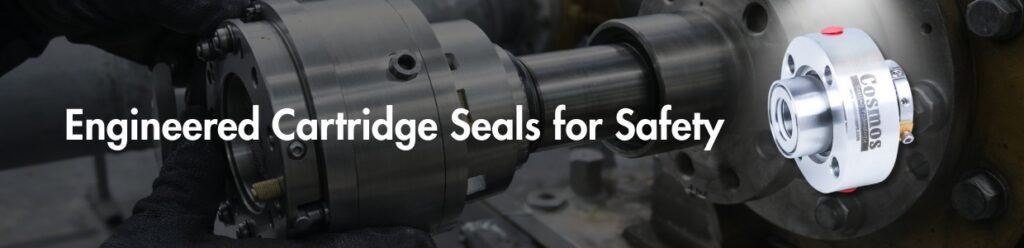
Cartridge mechanical seals are pre-assembled, self-contained sealing units that include the seal faces, springs, gland plate, and setting components in a single package. These seals are factory-set, eliminating the need for measurement or adjustment during installation.
Cartridge seals are designed to simplify installation, reduce human error, and deliver consistent sealing performance across installations. Because critical dimensions and face loading are controlled during manufacturing, cartridge seals offer improved reliability compared to traditional component seals.
Industries operating critical equipment, continuous processes, or safety-sensitive applications increasingly prefer cartridge mechanical seals due to reduced installation time, predictable performance, and lower risk of early-life failure.
Installation and Maintenance Comparison
Installation complexity is one of the most important differentiators between cartridge and component seals. Component seals require precise alignment, accurate setting, and careful handling of seal faces. Even minor installation mistakes can compromise performance and lead to leakage shortly after commissioning.
Cartridge seals, on the other hand, are designed for straightforward installation. The seal is mounted as a complete unit, with no requirement for setting measurements. This significantly reduces installation time and dependency on highly skilled personnel.
From a maintenance perspective, cartridge seals also simplify troubleshooting and replacement. Reduced handling of individual components lowers the risk of damage during maintenance activities, contributing to longer seal life and improved reliability.
Cost vs Lifecycle Value
At first glance, component mechanical seals often appear more economical due to their lower initial purchase cost. This makes them attractive for cost-sensitive applications or non-critical equipment.
However, when lifecycle costs are considered including installation time, failure risk, downtime, and replacement frequency cartridge mechanical seals often deliver greater long-term value. Reduced installation errors, longer service life, and fewer unplanned shutdowns offset the higher upfront cost.
For industries where downtime is expensive or safety is critical, lifecycle value far outweighs initial cost considerations. Evaluating seals based on total cost of ownership leads to more sustainable and reliable sealing strategies.
Industry Use Cases
Different industries favour different seal types based on operational priorities. Chemical processing plants often use cartridge seals for improved safety and leakage control, particularly when handling hazardous fluids. Power plants and refineries prefer cartridge seals for high-pressure and high-temperature services where reliability is critical.
Water treatment facilities and general manufacturing plants may continue using component seals in standard-duty applications where operating conditions are stable and maintenance expertise is readily available.
Pharmaceutical, food processing, and specialty chemical industries increasingly rely on cartridge seals to support hygiene, compliance, and consistent performance requirements.
Cosmos Seals offers both component mechanical seals and cartridge mechanical seals, supporting customers with application-specific recommendations to ensure the right balance between cost, reliability, and performance.
Call to Action
Choosing between cartridge seals and component seals requires careful evaluation of operating conditions, maintenance capability, and long-term cost implications. Cosmos Seals works closely with industrial customers to recommend sealing solutions that deliver reliable performance and reduced downtime.
📞 Call us at +91 9769133001
📧 Email us at info@cosmosseals.com
🌐 Visit www.cosmosseals.com
Frequently Asked Questions
Q1: Are cartridge mechanical seals always better than component seals?
A1: Cartridge seals offer easier installation and higher reliability, but component seals may be suitable for stable, non-critical applications.
Q2: Why do cartridge seals reduce installation-related failures?
A2: Cartridge seals are factory-set, eliminating measurement errors and reducing handling of seal faces.
Q3: Do cartridge seals cost more than component seals?
A3: Yes, initial cost is higher, but lifecycle costs are often lower due to reduced downtime and longer service life.
Q4: Which seal type is better for critical pump applications?
A4: Cartridge mechanical seals are generally preferred for critical, high-risk, or continuous-duty applications.