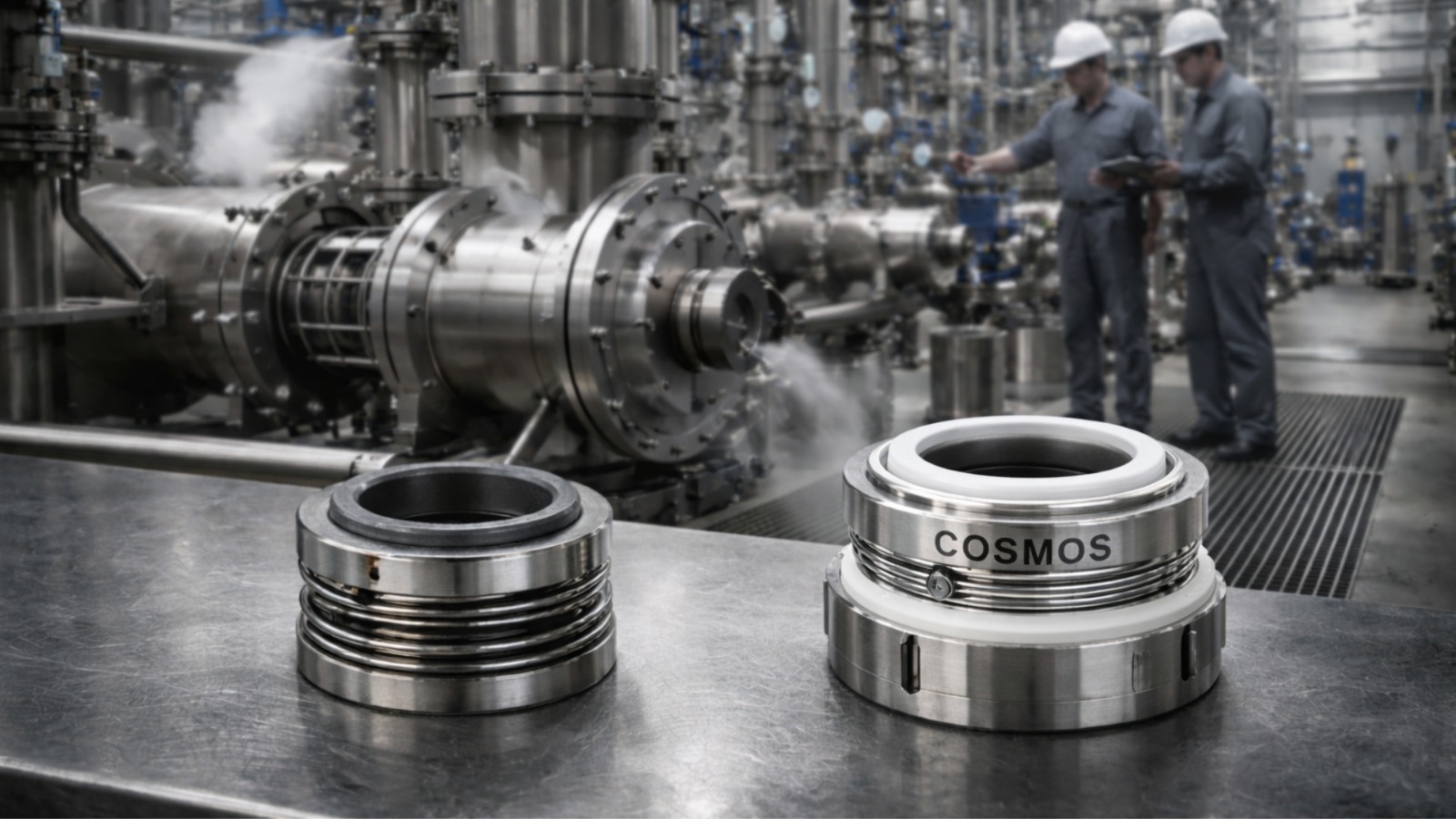

Chemical Process Challenges
The industry presents some of the most demanding operating conditions for mechanical seals for Chemical. Pumps, reactors, agitators Seal, and mixers in chemical plants often handle aggressive, volatile, and hazardous fluids under continuous operation. These processes involve fluctuating pressures, wide temperature ranges, and frequent start-stop cycles, all of which place significant stress on sealing systems.
Unlike general industrial applications, chemical processes rarely operate under stable or predictable conditions. Process upsets, batch changes, and reaction heat can rapidly alter fluid characteristics and operating parameters. Mechanical seals used in such environments must be designed not only for normal operation but also for abnormal and transient conditions.
Failure to account for these process challenges often results in leakage, seal face damage, and unplanned shutdowns. This makes seal design and material selection especially critical for chemical industry applications.
Corrosive Media Risks
One of the most serious challenges in the chemical industry is exposure to corrosive and reactive media. Acids, alkalis, solvents, hydrocarbons, and specialty chemicals can aggressively attack seal components if materials are not selected correctly.
Corrosion-related seal failure may not be immediately visible. Chemical attack can gradually weaken seal faces, springs, or secondary sealing elements, leading to sudden leakage without prior warning. Elastomers are particularly vulnerable to swelling, cracking, or hardening when exposed to incompatible chemicals.
Mechanical seals designed for chemical service must consider long-term chemical compatibility rather than short-term resistance. Manufacturers with chemical application expertise evaluate media composition, concentration, and temperature to reduce corrosion-related failure risks.
Seal Material Selection

Material selection is the foundation of reliable mechanical seals for chemical industry applications. Seal face materials must resist corrosion, thermal shock, and wear while maintaining stable sealing performance. Secondary sealing elements must withstand chemical exposure without degradation.
Using generic material combinations in chemical service is a common cause of premature seal failure. Even small changes in fluid composition or temperature can dramatically affect material behaviour. Selecting the correct face materials, elastomers, and metallic components ensures long-term reliability and reduced maintenance frequency.
Manufacturers offering component mechanical seals, cartridge mechanical seals, metal bellows mechanical seals, and customised material combinations provide greater flexibility for chemical applications. Application-specific material engineering is essential for preventing leakage and extending seal life.
Pressure and Temperature Handling
Chemical processes often operate under elevated pressures and temperatures, particularly in reactors, distillation units, and heat transfer systems. Mechanical seals must maintain face stability and lubrication under these demanding conditions.
High pressure increases face loading, while high temperature affects material strength, elastomer performance, and thermal distortion. Rapid temperature changes can also cause face cracking or distortion if seal materials are not properly matched.
Seal designs for chemical applications must account for pressure balance, heat dissipation, and thermal expansion. Manufacturers who analyse real operating envelopes rather than nominal design values help ensure stable seal operation across all process conditions.
Compliance and Safety Considerations
Safety and regulatory compliance are central to chemical plant operations. Mechanical seal leakage in chemical facilities can result in hazardous exposure, environmental contamination, and regulatory violations. Even minor leaks may trigger safety audits or shutdowns.
Chemical industry standards often require seals that support containment, emission control, and worker safety. Dual seal arrangements, controlled leakage designs, and robust sealing systems are frequently employed to meet these expectations.
Selecting seals that align with safety and compliance requirements reduces operational risk and supports long-term regulatory adherence. Seal manufacturers with chemical industry experience understand the importance of compliance-driven design decisions.
Conclusion and Call to Action
Mechanical seals used in the chemical industry must be engineered to withstand aggressive media, extreme pressures, and demanding operating conditions. Proper seal design, material selection, and application evaluation are essential for preventing leakage, reducing downtime, and maintaining safe operations.
Cosmos Seals supplies mechanical seals for chemical industry applications, including cartridge mechanical seals, metal bellows seals, and custom-engineered sealing solutions designed to handle corrosive media and challenging process conditions. With application-driven engineering and manufacturing expertise, Cosmos Seals supports chemical plants with reliable, long-term sealing performance.
📞 Call us at +91 9769133001
📧 Email us at info@cosmosseals.com
🌐 Visit: www.cosmosseals.com
Frequently Asked Questions
Q1: Why are mechanical seals critical in chemical industry applications?
A1: Mechanical seals prevent leakage of hazardous fluids, protect equipment, and support safe and compliant plant operation.
Q2: Can standard mechanical seals be used for corrosive chemical media?
A2: No, chemical applications require seals designed with compatible materials and corrosion-resistant designs.
Q3: How do temperature fluctuations affect mechanical seals in chemical plants?
A3: Temperature changes can cause material degradation, distortion, and loss of sealing stability if not properly accounted for.
Q4: Are cartridge seals suitable for chemical processing equipment?
A4: Yes, cartridge mechanical seals are widely used in chemical plants due to their reliability and reduced installation errors.